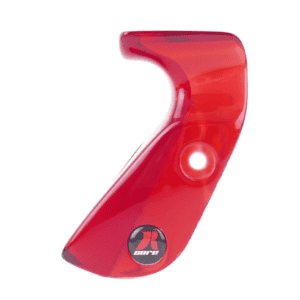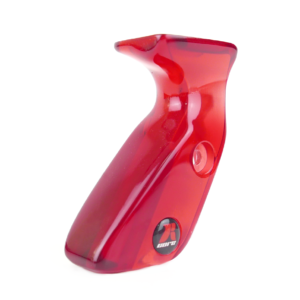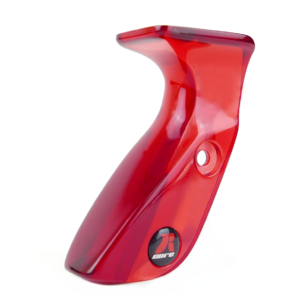
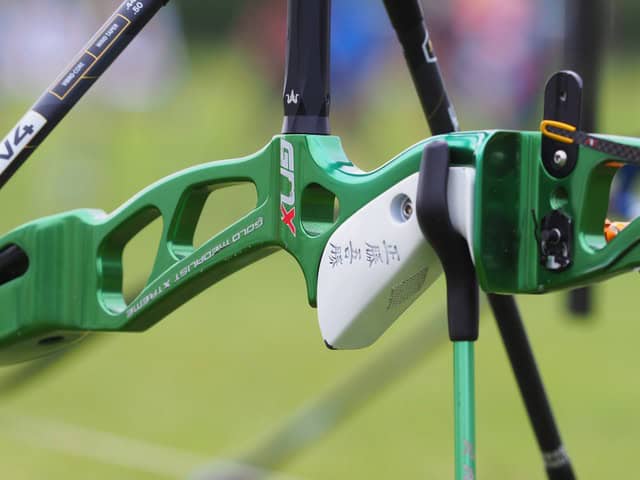
The grip is where every shot begins. Before the draw, before the anchor, before the release — there is the hand on the bow. And yet, for most of archery’s history, the grip was treated as an afterthought: a shaped piece of wood glued or screwed to the riser, designed for nobody in particular.
That era is over. Today, custom grips engineered for specific hand shapes, shooting styles, and biomechanical goals are reshaping how archers think about the most fundamental interface between human and bow.
This is the story of how we got here.
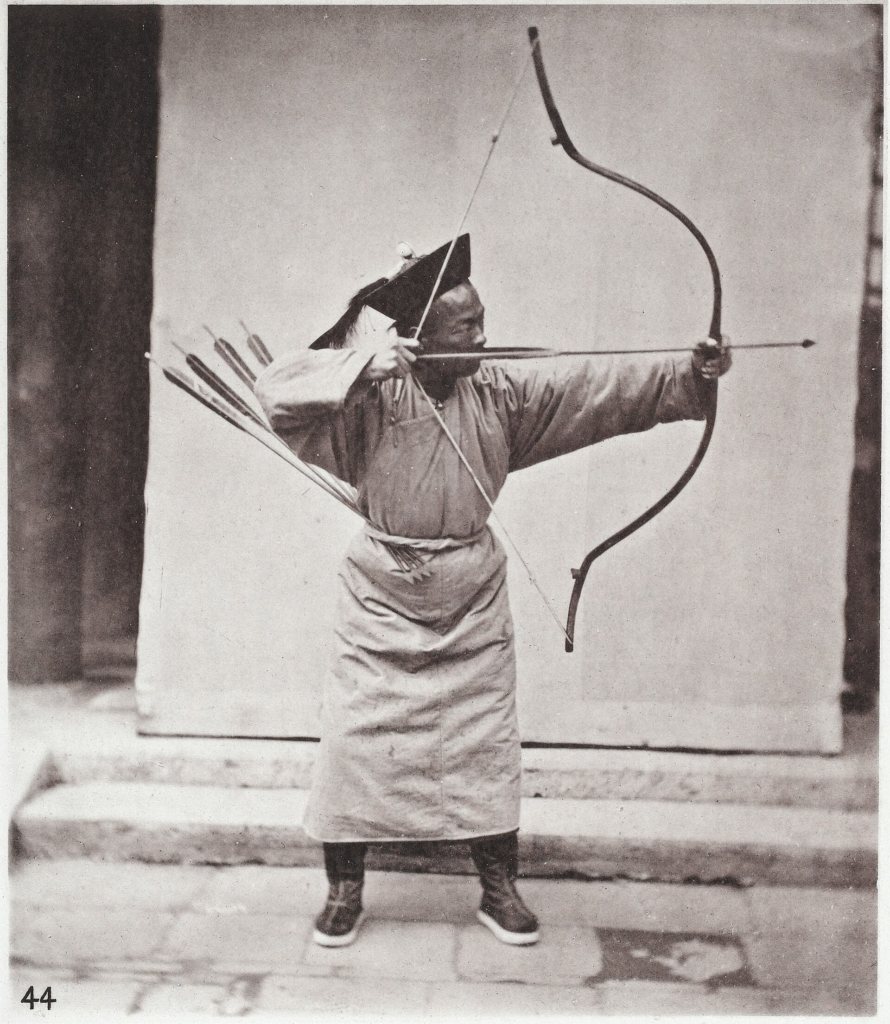
For thousands of years, the bow grip was nothing more than the thicker section of the stave where the archer placed their hand. Traditional longbows and self bows, whether English yew longbows, Mongolian composite bows, or Japanese yumi had no removable grip at all. The archer’s hand simply wrapped around the center , rigid section of the bow’s body.
These early “grips” were round, smooth, and offered zero guidance for hand placement. An archer developed consistency through sheer repetition as a result of thousands upon thousands of arrows until muscle memory compensated for the lack of ergonomic design.
The composite recurve bows of the Ottoman Empire and the Mongol cavalry, made from laminated layers of bamboo, horn, and sinew, were revolutionary in power and portability. But even these marvels of ancient engineering offered the archer nothing in terms of grip refinement. You held on, and you figured it out, with just a wrap of leather to help.
The modern archery grip traces its origins to one man: Earl Hoyt Jr.
Hoyt, who founded the Hoyt Archery Company in 1931 in St. Louis, Missouri, was among the earliest bow designers to recognize that the way an archer held their bow directly influenced accuracy and consistency. In the late 1940s and early 1950s, as Hoyt pioneered deflex-reflex bow design and fiberglass lamination, he also began experimenting with grip geometry.
By the mid-1950s, Hoyt introduced the semi-pistol grip, and in 1956, the full pistol grip, a dramatic departure from the straight, cylindrical handles that had defined bow design for centuries. The pistol grip angled the wrist into a more natural position, reducing strain and allowing the archer to apply pressure more consistently through the base of the thumb rather than wrapping all fingers around the handle.
This was a turning point. Hoyt’s Pro Medalist target bow, fitted with this new grip concept, would go on to become the weapon of choice for Doreen Wilbur and John Williams, who won gold medals at the 1972 Munich Olympics, the first time archery returned to the Games in decades.
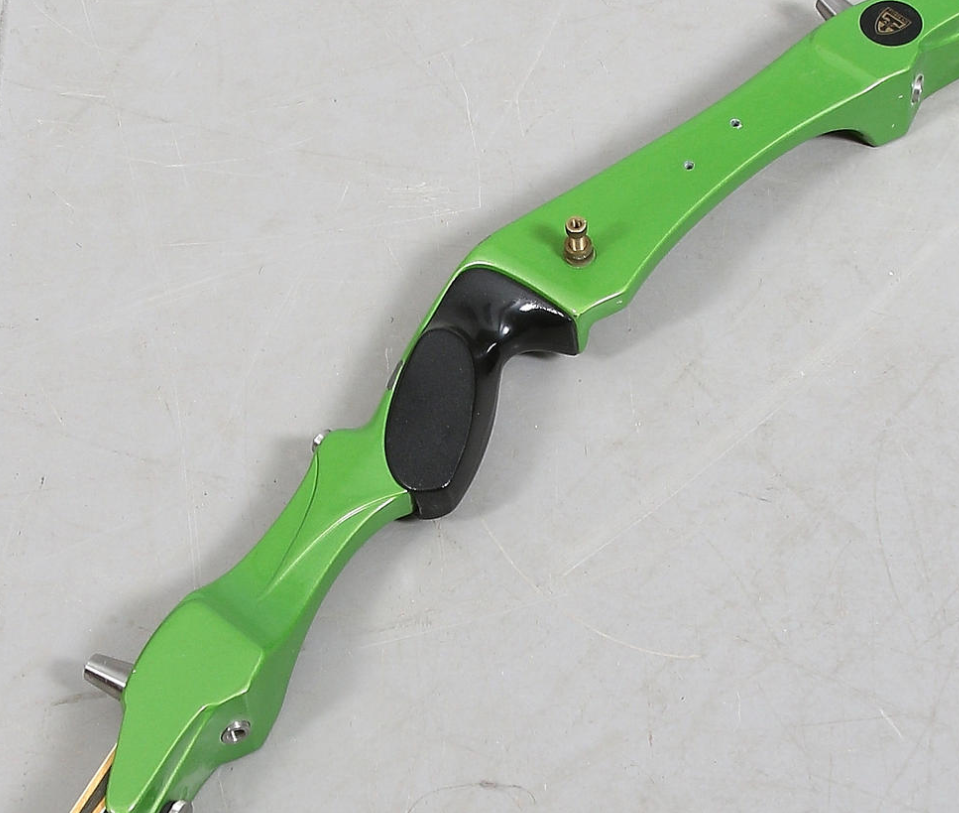
When Hoyt introduced the TD2 in 1975, it came with a plastic, changeable grip , one of the first removable grip systems. This seemingly simple innovation meant archers could swap grips without replacing their entire riser, opening the door to the aftermarket grip industry that exists today.
Through the 1980s and 1990s, as the ILF (International Limb Fitting) system became standard and three-piece takedown recurves dominated competitive archery, riser manufacturers settled into a predictable pattern: each bow shipped with a single stock grip, designed to be inoffensive and bland enough for the widest possible range of shooters.
Hoyt refined its grip across successive risers, from the TD series through the Elan, Matrix, and eventually the Xceed and Formula lines, generally offering a medium-angle grip with a rounded face. The Hoyt grip became so ubiquitous that it effectively defined what a “standard” recurve grip felt like for an entire generation of archers. Thay hoyt grip got an upgrade after 2015 with some in-between iterations, and has become the ubiquitous standard at 42 degrees we see on every Hoyt riser as it comes out of its box.
Win & Win (WIAWIS), the Korean manufacturer that came to dominate Olympic recurve alongside Hoyt, took a slightly different approach. Their grips tended to be rubberized and slightly lower in angle, reflecting Korean coaching philosophy that emphasized bone-to-bone alignment and a relaxed wrist. Win & Win risers like the INNO series and later the TFT-G featured grips engineered with their Torque-free system
Spigarelli, the Italian company founded in 1974 by Olympic archer Sante Spigarelli, brought an artisanal European sensibility to grip design. Spigarelli risers shipped with simple wooden grips that were often functional but variable in quality. Earlier Spigarelli grips had well-documented issues: rattling, inconsistent shaping from grip to grip, and a fit that sometimes required the archer to add glue or tape to eliminate noise. Their newer models, like the DMS and Revolution 2, feature significantly improved wooden grips that Massimo and Sante Spigarelli designed with better ergonomics.
Gillo, another Italian company, emerged as a force in the barebow resurgence of the 2014–2016 era. The Gillo G1 and G2 risers became enormously popular among barebow archers, partly because Gillo was one of the early companies to include barebow-specific accessories and attachment points. Gillo’s stock grips are typically 3D-printed plastic, functional but basic, and the company openly supports the aftermarket grip ecosystem.
The common thread across all OEM grips? They were designed to be acceptable for the average hand. Not optimized. Not personalized. Acceptable.
And for serious archers, “acceptable” was never enough.
The modern aftermarket grip movement began around 2005–2006 with one frustrated archer: Paul Jaeger.
Jaeger, based in Colorado, was dissatisfied with the grip options available for his recurve bows. So he started casting his own from polyurethane resin. When he showed an early prototype to competitive recurve archer John Magera, word spread. It was an innovation back in those years.
Over the following years, jager became the first well-known dedicated grip manufacturer, offering cast polyurethane grips for a range of risers. Their product line grew to include the BEST Style grip (allegedly developed in collaboration with Coach Kisik Lee), the jager 2.0, the CMS (Coach Mel Style), and eventually signature series grips named after competitive archers.
Jager contribution to archery was genuine: it proved that a dedicated grip could meaningfully improve an archer’s connection to their bow.
However, Jager’s approach has remained rooted in traditional manufacturing. His polyurethane grips are cast in silicone molds, which limits the speed of iteration and the range of available designs for any given riser. Riser support, while there for popular models, can significantly lag behind newer or more niche platforms. And customization is largely confined to choosing a grip model. The shape itself is fixed by the mold.
For many years, jager was essentially the only game in town. If you wanted an aftermarket recurve grip, you went to jager. That monopoly began to crack around 2019.
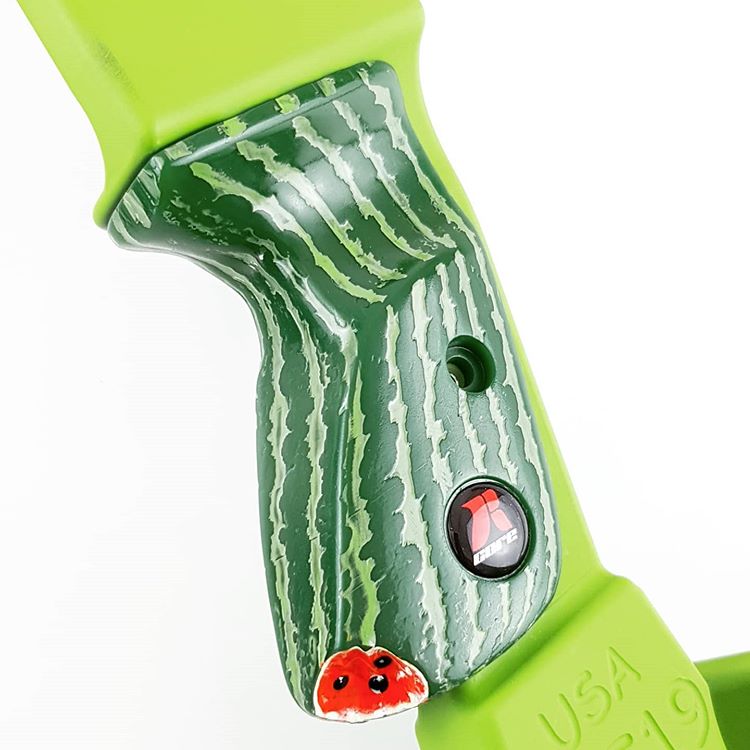
RCore was founded by Aris Korbetis, an archer and engineer based in Greece, out of the same frustration that launched jager a decade earlier. He wanted to experiment and make a comfortable grip with a shape that promoted repeatability, that would “disappear” during the shot, and ,crucially ,that would feel identical across all of his risers, regardless of brand.
These requirements changed everything.
Rather than casting physical molds, he built RCore around a digital-first philosophy: every grip design begins as a parametric 3D model, rather than a scanned mesh, that can be adapted to any supported riser’s geometry while preserving the exact same external shape and feel. This means an archer shooting an RCore Master grip on a Hoyt Xceed will have the identical hand experience as one shooting the same Master grip on a Gillo GT, a Spigarelli Zen, a Win & Win ATF-DX, or a Mybo Pathfinder.
Today, RCore supports over 70 riser brands and models and adapts all models to any new riser that it is launched, within days, a compatibility range that no other grip manufacturer matches. And their material options extend far beyond cast polyurethane:
Every RCore grip can be ordered in any angle from 20 up to 55 degrees with common options the low(30) mid(38) and high(45) angles, with optional features like lifeline ridges, anti-slip patterns (pyramidal, hex, stipple, diamond, surf), and thumb positioners, sear edges etc. The result is what RCore calls the “Infinite Customization Matrix” ,a system where the base design is a framework, not a finished product.
RCore’s first official sale was in 2020. By 2026, they had accumulated over 1,800 verified reviews with a 4.86-star average rating, shipping grips to a very wide range of countries worldwide, a true global reach.
If RCore had to choose one grip that embodies its philosophy, it would be The Master.
The Master wasn’t designed in isolation. It was , and continues to be ,refined through a constant feedback loop with the many archers who shoot it. Every review, every email describing how a hand sits at full draw, every photo of a lifeline mark after a training session feeds back into the design. The result is a grip that has been quietly optimized by thousands of real-world data points.
Its signature feature is an angled ridge aligned with the palm’s lifeline. At just 0.7mm, it’s subtle enough to disappear at full draw but pronounced enough to guide the hand into the exact same position, shot after shot. The applied force channels straight into the center of the bow, eliminating torsional forces before they start. A standard thumb positioner at the top completes the alignment system.
What makes The Master remarkable isn’t any single clever feature, it’s the accumulation of small refinements driven by archers who report back that their groupings tightened, their scores climbed, or that the grip simply “clicked” in a way their stock grip never did. From weekend club shooters to national-level competitors, the feedback is consistent: hand placement becomes automatic, and the mental bandwidth previously spent on grip checking gets redirected to execution.
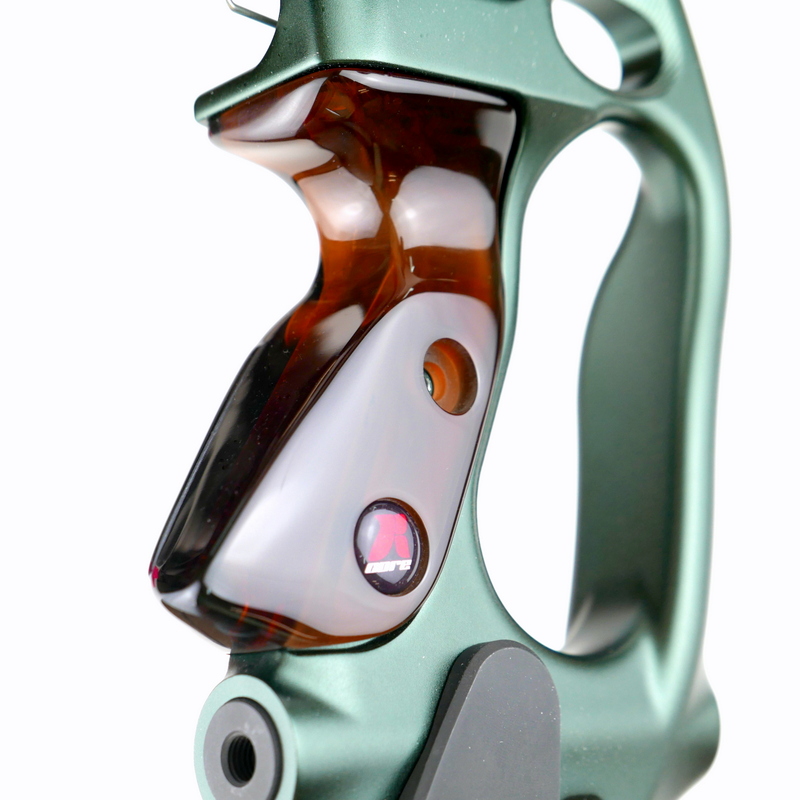
What truly distinguishes RCore from both OEM manufacturers and other aftermarket grip makers is the depth of their collaborations with elite competitive archers.
Jake Kaminski, two-time Olympic silver medalist (London 2012 and Rio 2016), professional archer, coach, and one of the most recognized figures in modern archery, partnered with RCore to develop the I AM grip series.
The I AM series is not a cosmetic endorsement. Kaminski drew on decades of elite-level competition experience to engineer grips that address specific biomechanical challenges:
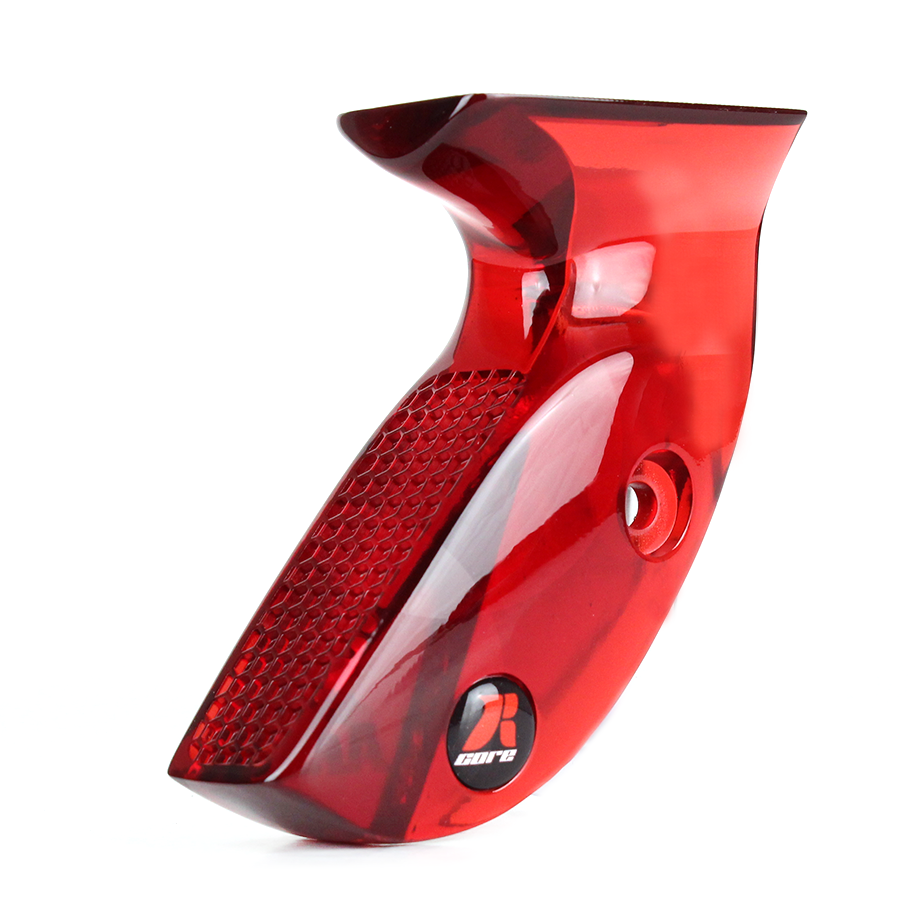
Each model in the I AM series reflects Kaminski’s signature design philosophy: flat palm surfaces without slant, sharp edges for intuitive placement, and thumb positioners for correct alignment. These are grips designed not just for comfort, but to provide constant feedback, telling the archer when their hand is right and when something is off.
RCore’s second major collaboration is with Patrick Huston, a two-time Olympian (Rio 2016 and Tokyo 2020) representing Great Britain, three-time World medalist, and a deeply technical archer who thinks about grip design in terms of fascial lines and skeletal alignment.
Huston brought a fundamentally different design philosophy to RCore: where Kaminski’s grips are flat and sharp, Huston’s are curved and organic.
The YeO series represents the culmination of years of development with Huston and his coaches. The system is designed around technical progression:
The Curve Eternal is Huston’s most radical design. Developed over two and a half years, during which Huston won the Kings of Archery 2023, the Berlin Open, took silver at the European Grand Prix, and placed fourth at the World Field Championships, the Curve Eternal rejects the modern convention of flat, angular grips entirely.
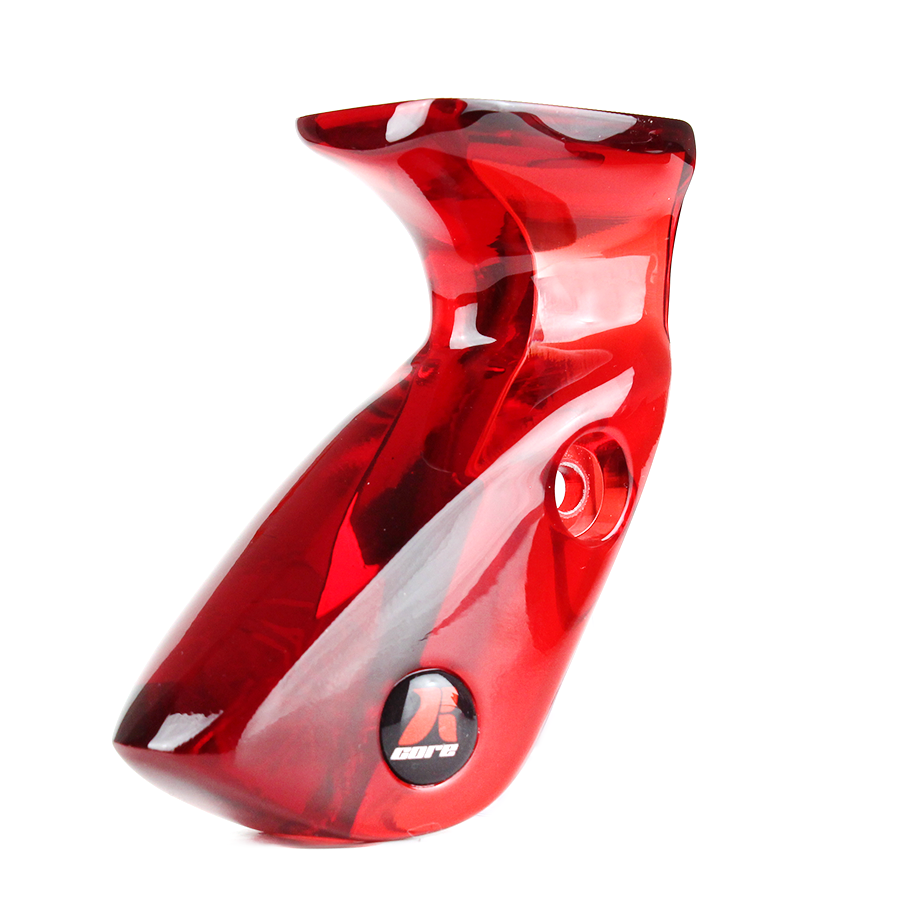
Huston’s philosophy: flat and straight geometry cannot be found inside the human body. The Curve Eternal features smooth, organic contours designed to fit naturally into the hand while encouraging internal rotation and locking of the front arm. Patrick developed this design following a front shoulder injury that demanded extra assistance in maintaining arm control, and the resulting geometry proved so effective that it became a standalone product.
No other grip manufacturer offers this kind of athlete-driven, biomechanically-grounded design collaboration. While some competitors offer “signature” grips that amount to a name stamped on an existing mold, RCore’s collaborations result in entirely new grip geometries, developed through iterative real-world testing at the highest levels of the sport.
Hoyt Archery (USA, founded 1931) The gold standard of Olympic recurve risers. Hoyt’s stock grips have improved steadily over the decades, and their compound division offers the X-Act Grip and Modular Grip System with interchangeable angled plates. For recurve, Hoyt grips remain competent but generic, designed for the broadest possible appeal. Most serious Hoyt recurve shooters eventually explore aftermarket options.
Win & Win / WIAWIS (South Korea)
Korean engineering precision applied to every component, including grips. Win & Win grips tend toward lower wrist angles and rubberized surfaces, reflecting the Korean coaching emphasis on relaxed hand positioning. Their grips are well-made but, like all OEM grips, designed for a statistical average hand rather than yours specifically.
Gillo (Italy)
A beloved brand in the barebow community. Gillo’s stock grips are typically basic 3D-printed plastic parts, functional, but openly designed to be replaced. Gillo embraces the aftermarket ecosystem, and their risers (G1, G2, GT, GF) are among the most popular platforms for custom grip upgrades from RCore.
Spigarelli (Italy, founded 1974)
Founded by Olympic archer Sante Spigarelli, this company brings Italian craftsmanship to barebow and recurve design. Spigarelli’s newer grips (particularly on the DMS and Revolution 2) represent a significant improvement over their earlier wooden grips, which were notorious for inconsistent shaping and loose fitting. Still, many Spigarelli archers find their way to aftermarket solutions for a more personalized fit.
Mybo / Merlin (UK)
Mybo risers like the Wave and Mykan have earned loyal followings, particularly among barebow archers. Their stock grips are adequate starting points, but all Mybo risers are now fully supported by RCore for custom grip upgrades.
Jager grips (USA, ~2005)
The original aftermarket grip specialist. jager pioneered the concept of dedicated aftermarket bow grips and introduced innovations for their time. Their cast polyurethane grips are durable and well-regarded. However, jager’s traditional casting process means slower iteration cycles, limited material options (primarily polyurethane in solid or swirled colors), and fixed design geometries per mold. Their riser support, while extensive for mainstream models, tends to trail behind when new risers hit the market. they remain a respectable choice for archers who know exactly which of their existing models suits them.
RCore (Greece, 2020)
The digital-first grip manufacturer. RCore’s parametric design system enables over 70 riser compatibilities, four material families (plastic, glass-like, automotive paint, natural wood), full angle customization, and athlete-developed designs from Jake Kaminski and Patrick Huston. Their Scan’n’Print service can digitize any existing grip and reproduce it in the RCore design language making it available for any riser with any modification possible.. With a 4.86 rating across 1,800+ reviews and worldwide shipping, RCore represents the current state of the art in custom bow grip engineering.
Understanding grip design requires a shared vocabulary. Here are the key terms:
Top: The portion between the top of your hand and the riser. Can be flat or contoured , some designs, like Kaminski’s I AM series and The Master, include a thumb positioner here to enforce correct knuckle alignment.
Throat: The narrowest part of the grip where your thumb web sits. Throat width dramatically affects comfort , too narrow squeezes larger hands, too wide loses the “locking” sensation that provides feedback. Also varies in height to accommodate different sizes of hands.
Palm area/face: The palm contact surface. Ranges from round (traditional) to completely flat (Kaminski I AM series) to subtly curved (Huston Curve Eternal). The face angle (slant), whether it tilts toward the thumb or stays neutral , influences how force is directed into the bow and supports the archer’s shooting style
Grip Angle: Measured relative to a horizontal plane. Low angles (23°–30°) are common in barebow; mid angles (33°–38°) suit most recurve shooters; high angles (40°–53°) are associated with Olympic-style high-wrist technique. Changing grip angle by more than a few degrees requires hundreds of shots to get used to.
Lifeline Ridge: A subtle raised edge aligned with the palm’s lifeline that helps the archer “click” into the correct hand position during setup. At RCore, this is an optional feature at just 0.7mm height ,present enough to guide, subtle enough to disappear at full draw.
Anti-slip: Surface texturing applied to the face and throat area. Options at RCore include pyramidal, hexagonal, stipple, diamond, and surf patterns , each providing different levels of grip and tactile feedback. It is not only for antislip!
The trajectory is clear: archery grips are moving from mass-produced afterthoughts to precision-engineered, individually optimized components.
The key trends shaping the future include:
Digital scanning and reproduction. RCore’s Scan’n’Print service already allows archers to send in a grip they love and have it digitized, modified, and reproduced in any material. As 3D scanning becomes more accessible, this kind of personalization will become standard.
Biomechanical collaboration. The work being done with athletes like Kaminski, Huston and upcoming collaborators, grips designed around fascial lines, skeletal alignment, and progressive training systems , represents a level of sophistication that was unimaginable even a decade ago. Expect more athlete-engineer partnerships pushing grip design into sports science territory.
Riser-agnostic design. The idea that you should have to change your grip geometry every time you change your riser is becoming obsolete. RCore’s parametric design philosophy, same grip, any riser, is the future. Your grip should be yours, regardless of what bow it sits on.
Material innovation. From transparent glass-like resins to automotive-grade 2K paint finishes to natural hardwoods, the material palette for custom grips continues to expand. Each material brings different thermal properties, surface feel, weight, and aesthetics. Big driver is constant experimentation with materials and processes.
The archery grip history has come a long way from a bare section of yew stave. Today, it is an engineered interface, a piece of technology that can be tuned, customized, and optimized for your unique hand, your shooting style, and your competitive goals.
The only question left is: what does your perfect grip look like?
At RCore, we believe the grip is at the core of archery. Explore our grip designs, browse our material options, or check if your riser is supported. With over 70 compatible risers, four material families, and designs developed with Olympic athletes, we make grips that are as individual as the archers who shoot them.